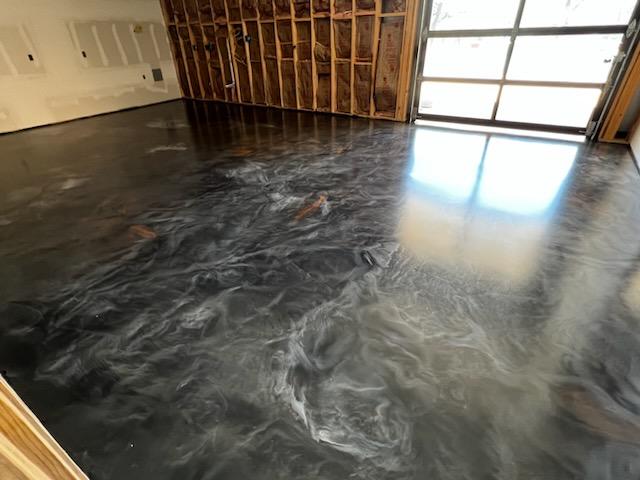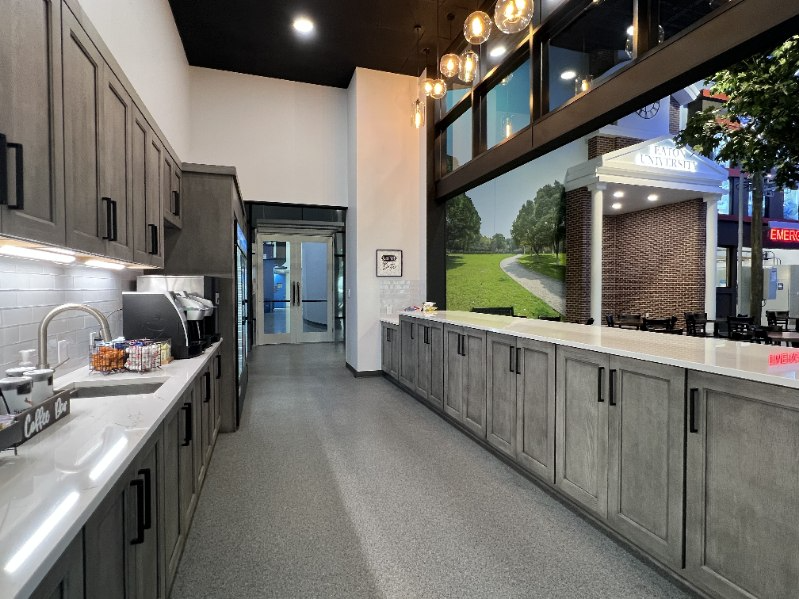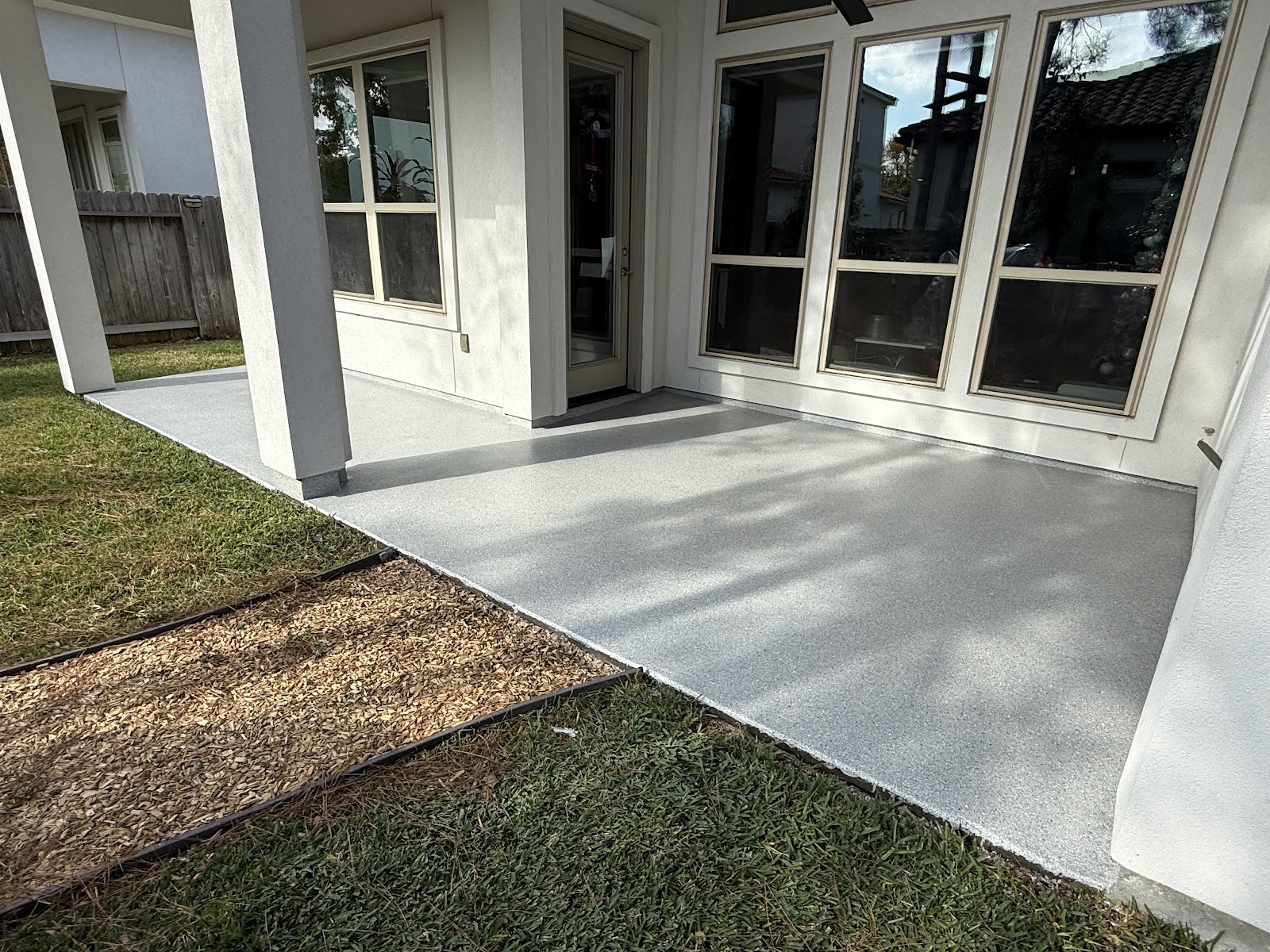
If you're standing in your Conroe garage right now looking at stained concrete, cracked edges, and maybe some spots where the slab is starting to spall, you've probably started researching floor coatings. The two names you keep seeing are epoxy and polyaspartic. Both are solid choices, but they work differently and cost differently, and which one makes sense depends on what your garage actually needs to handle.
Epoxy is the Workhorse
Epoxy has been the standard garage coating for decades, and there's a reason. It's a two-part system, resin and hardener, that chemically bonds to concrete and cures into a hard, glossy finish. In Conroe's heat and humidity, epoxy holds up well. It resists oil stains, won't yellow in sunlight the way some coatings do, and creates a surface you can actually clean instead of just living with grime.
The curing time is the real trade-off with epoxy. You're looking at 24 to 48 hours before you can walk on it, and 5 to 7 days before the coating reaches full strength. If you need your garage back in use quickly, that matters. Epoxy also requires the concrete to be in decent shape before application. If you have moisture issues coming up through the slab, epoxy won't stick well. It's picky about surface prep, and it should be. A bad prep job ruins everything downstream.
Cost-wise, epoxy runs between $3 and $12 per square foot installed, depending on thickness, color flakes, and whether you add a topcoat. For a standard two-car garage in Conroe, you're typically in the $1,500 to $3,500 range if you hire it done.
Polyaspartic is the Fast Setter
Polyaspartic is a newer chemistry. It's also a two-part coating, but it cures in hours instead of days. In many cases you can drive on a polyaspartic floor the same day it's applied. That speed comes in handy if your garage is your workspace or if you just want to get the project finished fast.
Polyaspartic is also more flexible than epoxy. It won't crack as readily if the concrete shifts slightly, and it handles temperature swings better. In a climate like Conroe's, where you go from hot days to cooler nights, that flexibility can extend the life of the coating. It's also more moisture tolerant during application, which matters in our humid environment.
The cost is higher. Polyaspartic typically runs $8 to $20 per square foot installed. For the same garage, you're looking at $2,500 to $5,000 or more. You're paying for the faster cure time and the better flexibility, and you're paying for a product that takes more skill to apply correctly.
Durability and Maintenance
Both coatings last years if they're installed right. Epoxy typically holds up for 5 to 10 years in a residential garage with normal use. Polyaspartic can last just as long or longer, partly because it flexes with the concrete instead of sitting rigid on top of it.
Maintenance is similar for both. You sweep regularly, mop with mild soap and water, and avoid dragging heavy items across the surface. Both will show footprints and dust if you let them, but that's the glossy finish working as designed. It's easy to clean. Neither coating needs stripping and resealing every couple of years if it's applied right the first time.
Moisture and Concrete Condition
This is where the rubber meets the road in Conroe. Our humidity is real, and moisture in concrete is common. Epoxy needs a dry slab. If you've got moisture wicking up from below, epoxy won't bond properly and will eventually bubble or peel. Polyaspartic is more forgiving, but neither coating is waterproofing. If water is actively coming up through your slab, you need to address that first, regardless of which coating you choose.
Before any coating goes down, the concrete needs to be tested for moisture. A calcium chloride test or relative humidity test tells you if the slab is ready. If it's not, you're looking at sealing or drying the slab first, which adds time and cost but saves you from a failed coating later.
Which One for Your Garage
If your garage is mainly storage and you want the best value, epoxy is solid. It's proven, it's affordable, and it works. If you need the space back immediately or if you want the longest possible lifespan and the most forgiveness for minor concrete movement, polyaspartic is worth the extra money.
Talk to whoever applies it about the concrete condition first. A good installer will test for moisture and won't promise you a coating on a slab that isn't ready. That honesty is worth more than any discount.
Epoxy Garage Flooring, LLC has been coating Conroe garages for years. We'll look at your concrete, talk through your timeline and budget, and recommend what actually makes sense for your space. Call us to schedule a walk-through.