When you build a home gym in Conroe, you're making a real investment in your space and your fitness routine. The floor you choose matters more than most people think. It affects how your equipment feels, how long it lasts, and how your concrete holds up under years of dumbbells, treadmills, and barbells. Two options come up most often: epoxy coatings and rubber mats. Both work, but they work differently, and the choice depends on what you're actually doing in that room.
What Epoxy Does in a Home Gym
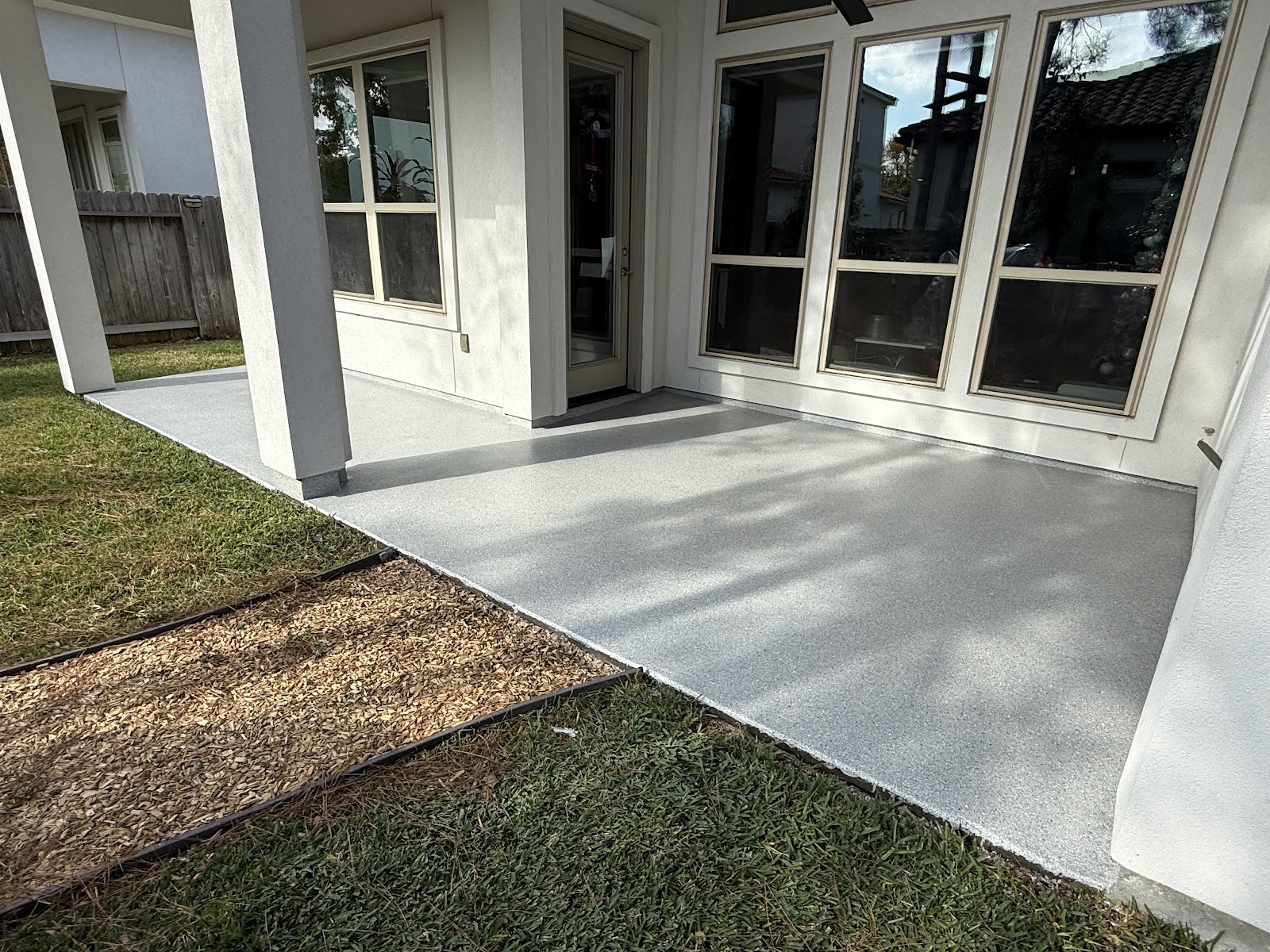
Epoxy is a hard, seamless coating that bonds directly to your concrete. Once it cures, you get a smooth, durable surface that handles drops, sweat, and heavy foot traffic without breaking down. In a Conroe garage gym, that matters. Humidity and temperature swings here are real, and epoxy stands up to both.
The main benefit is durability and ease of cleaning. Sweat and water don't seep into concrete when it's sealed with epoxy. You mop it, and you're done. No bacteria settling into porous concrete. No stains that won't come out. Over five to ten years, that saves you time and keeps the floor looking solid. Epoxy also protects the concrete underneath from damage. Dropped weights, salt from sweat, and moisture all take a toll on bare concrete. Epoxy stops that wear.
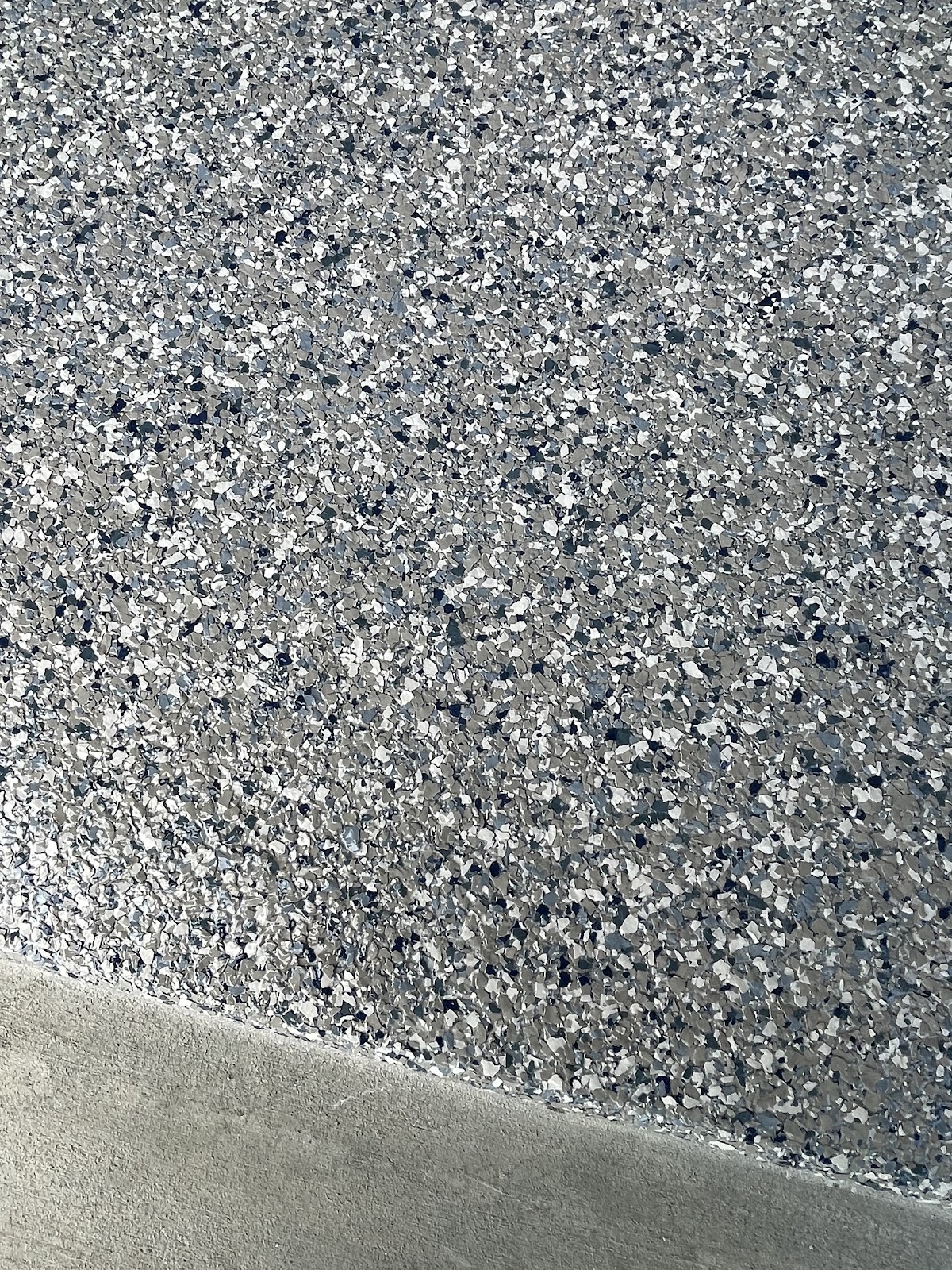
The finish is smooth, which some people like for barefoot work or light cardio. Others find it too slick when they're lifting heavy or moving fast. You can add texture to epoxy during installation to improve grip, and many people do.
Where Rubber Mats Shine
Rubber mats are modular. You roll them out, and you're done. No installation, no curing time, no mess. If you move or want to change the layout, you pick them up and go. That flexibility is real, especially if you're not sure yet what your gym will look like.
Rubber absorbs impact. If you're dropping barbells, slamming medicine balls, or doing plyometrics, rubber mats cushion the blow. Your joints feel it less. Your equipment lasts longer. Your neighbors hear less noise, which matters in a residential area.
The downside is maintenance. Rubber mats sit on top of concrete. Sweat gets underneath. Moisture can trap under there, especially in our Texas humidity. Mold and mildew grow. Rubber also degrades over time, especially in heat and direct sunlight. A mat might last five to seven years in a Conroe garage before it starts breaking down, cracking, or smelling. You're replacing sections or the whole floor.
Rubber mats also create seams. Dust and debris settle in the gaps. Cleaning is harder. And if you're moving heavy equipment around, the edges can catch and curl.
Cost and Installation Time
Epoxy costs more upfront. For a typical two-car garage, you're looking at $1,500 to $3,000 installed, depending on prep work and finishes. But it's a one-time investment. The floor doesn't degrade significantly for ten years or more.
Rubber mats cost less initially. A set of interlocking mats for the same space might run $800 to $1,500. But you'll likely replace sections or the whole floor in five to seven years, which means you're spending money again.
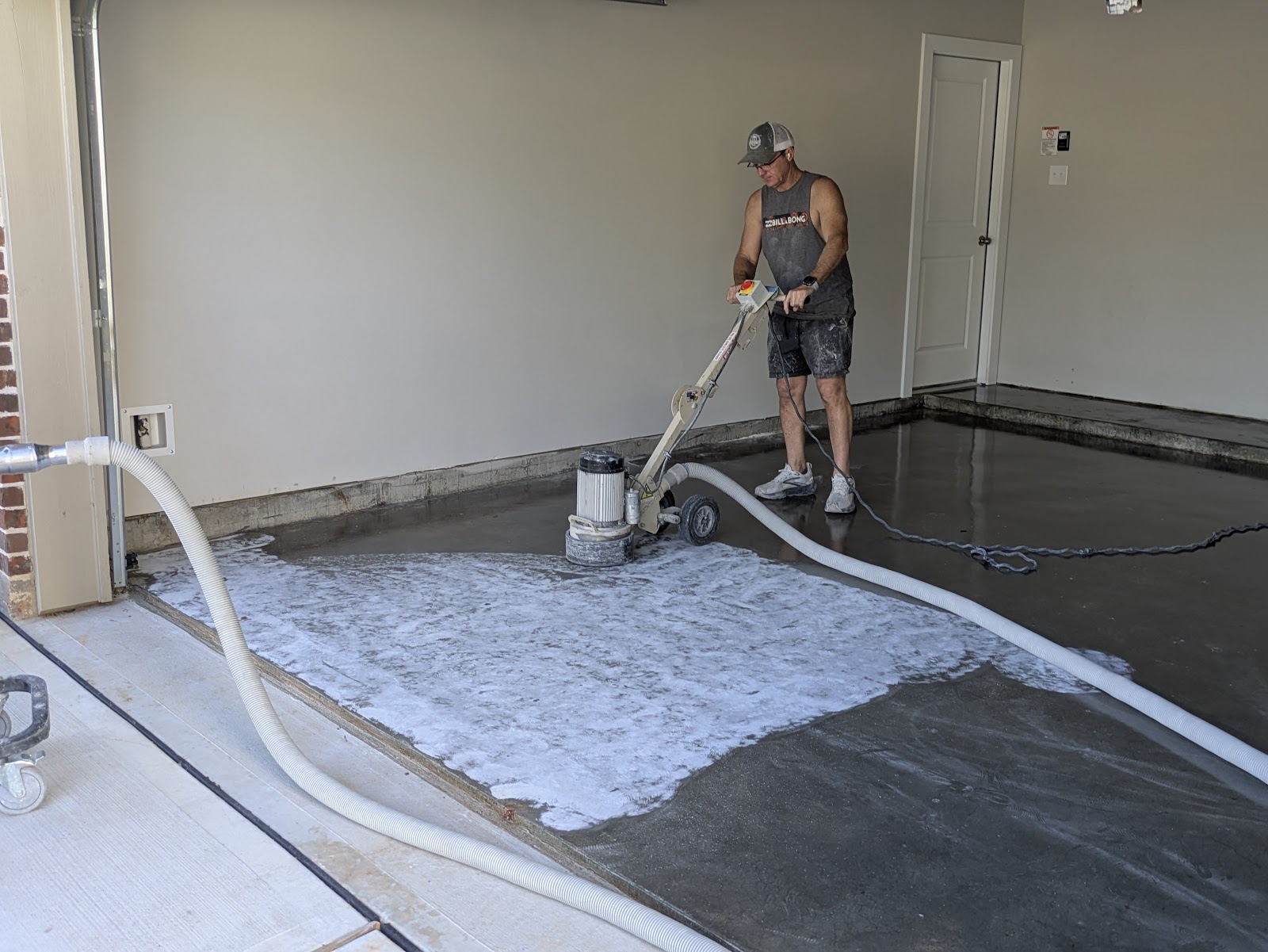
Installation is different too. Epoxy requires proper surface prep. The concrete has to be clean and free of sealer or moisture. It takes a few days to cure fully. You can't use the space for a week. Rubber mats go down in a day, and you can use the floor immediately.
Sweat, Moisture, and Humidity in Conroe
Conroe's climate is humid. That's the reality. If you're sweating hard in a closed garage, moisture builds up. Epoxy handles this better. It seals the concrete, so moisture doesn't get trapped underneath. The floor itself won't degrade.
With rubber mats, you need airflow. A fan running during and after workouts helps, but it's not perfect. Moisture still accumulates under the mats over time. In a sealed garage, that's a problem.
Which One Fits Your Gym
Choose epoxy if you're building a serious, long-term gym space. You want durability, easy cleaning, and a floor that will outlast your equipment. You don't mind the upfront cost or the installation time.
Choose rubber mats if you want flexibility, immediate cushioning, and low upfront cost. You're willing to maintain the mats, keep the space well-ventilated, and replace them in a few years. You're doing high-impact work where shock absorption matters most.
Many people use both. Epoxy covers the whole garage floor for durability and easy cleaning, then rubber mats go down in the lifting area where impact matters most.
The Bottom Line
Your home gym floor is part of your routine. Epoxy gives you a solid, maintenance-light surface that protects your concrete and lasts. Rubber mats give you cushioning and flexibility but require more upkeep. Think about how long you plan to keep this gym, what you'll be doing in it, and how much time you want to spend cleaning and maintaining the floor.
If you're ready to go with epoxy for your Conroe garage, Epoxy Garage Flooring, LLC can walk you through options and get the job done right. Give us a call to talk about your gym space and what will work best for your setup.